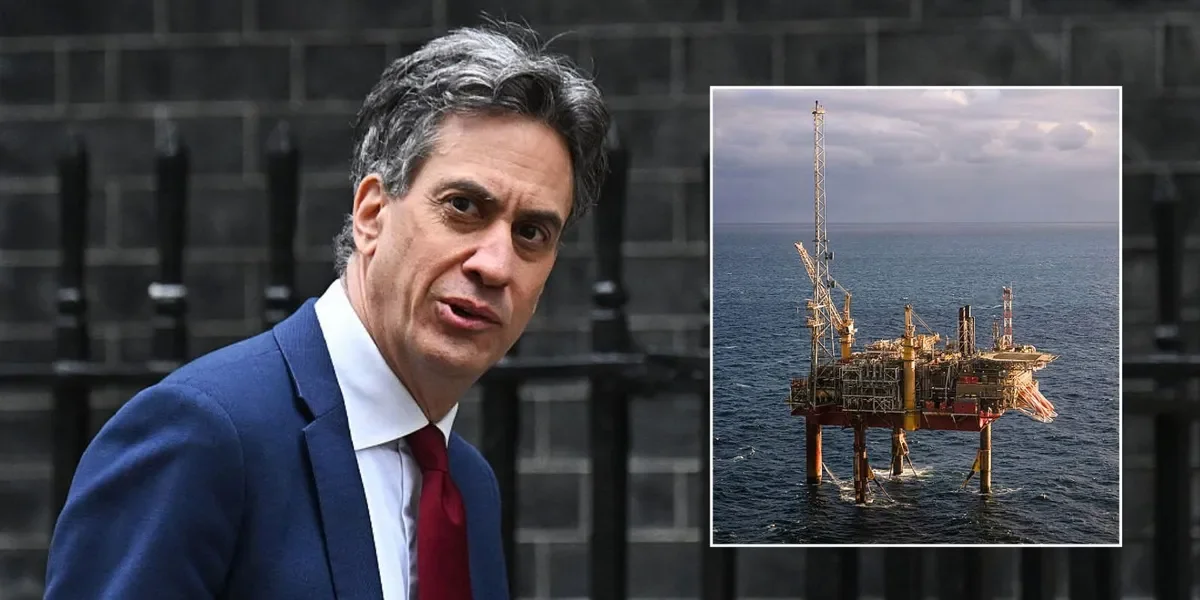
A coalition of industry leaders, trade unions, and environmental figures has called on ministers to overhaul the North Sea windfall tax, warning it is undermining the United Kingdom's energy sector.
The current tax regime, raised to a headline rate of 78 percent, has prompted concerns about weakening investment, accelerating job losses, and increasing dependence on imported energy.
With the sector experiencing a significant downturn, including a complete halt in new drilling last year, campaigners argue urgent fiscal reform is necessary to protect skilled employment and ensure national energy security.
Industry coalition raises concerns
The recent increase in the energy profits levy has drawn criticism from a range of stakeholders representing more than 7,000 companies and business leaders.
This cross-industry alliance, which includes senior executives, trade union officials, and environmental campaigners, argues the high tax rate is making the UK one of the least competitive environments for oil and gas investment.
The Aberdeen & Grampian Chamber of Commerce recently coordinated an open letter to political leaders, reflecting widespread concern that current tax policy could prompt long-term industrial decline.
According to industry sources, signatories have urged the government to accelerate plans for a new fiscal framework, currently scheduled for 2030, to take effect as soon as possible.
Tax policy and investment implications
Under present arrangements, the combined tax on North Sea oil and gas profits stands at 78 percent, following Labour’s decision to increase the energy profits levy to 38 percent.
Industry groups claim this level is driving capital away from British waters, with proposed reforms suggesting a reduction in the headline rate to around 40 percent. Russell Borthwick, chief executive of Aberdeen & Grampian Chamber of Commerce, said policy decisions are “driving investment away” from the sector.
Borthwick added that a managed transition should protect jobs, safeguard energy supplies, and support supply chains while the UK expands its renewable capacity.
Decline in exploration and job fears
The impact of the current tax environment is evident in declining exploration activity. In the previous year, no new wells were drilled in the UK sector of the North Sea the first such occurrence since 1964.
According to business groups, the downturn has triggered warnings of tens of thousands of potential job losses across supply chains, which they describe as avoidable with revised taxation.
Trade union leaders have voiced concerns regarding the implications for employment. Sharon Graham, general secretary of Unite, said the lack of a “credible jobs plan” meant government policy was accelerating job losses and failing energy communities.
Gary Smith, general secretary of GMB, described the reduction in investment as “bad for national security” and “catastrophic for the environment” due to increased reliance on imported fuels.
Calls for fiscal reform intensify
Campaigners argue that reducing domestic oil and gas production before alternatives are fully established would not reduce overall UK energy demand, but would instead shift dependency toward imports with higher associated emissions.
This sentiment was echoed in a letter coordinated by the Aberdeen & Grampian Chamber of Commerce, which called for the headline North Sea tax burden to be brought into line with international competitors.
Business leaders stated that unless action is taken promptly to provide certainty for investors, there is a risk that investment and jobs will move to regions with more favourable tax regimes.
Environmental and employment perspectives
Environmental figures have weighed in on the debate, stressing the need to balance decarbonisation with economic security. Dale Vince, founder of Ecotricity, stated the windfall tax should be scrapped to “protect the industry and its workers”.
Industry executives such as Greg Jackson, chief executive of Octopus Energy, noted that importing liquefied natural gas has a greater environmental impact than using gas produced domestically.
Juergen Maier, chairman of Great British Energy, commented that the approach for the energy transition should combine both fossil fuel and renewable energy development rather than treating them as mutually exclusive sectors.
Final Summary
The backlash against the North Sea windfall tax highlights rising tensions between the government, industry, and unions over the future of Britain’s energy sector. While intended to raise public revenues and accelerate a shift to renewables, the high tax rate is viewed by many as a deterrent to investment and a contributor to job losses.
Calls are mounting for fiscal reforms that would ensure a managed transition, keep energy supplies secure, and maintain the UK’s industrial base through a period of historic change. For wider context and up-to-date tax resources, readers can consult the Pie app.